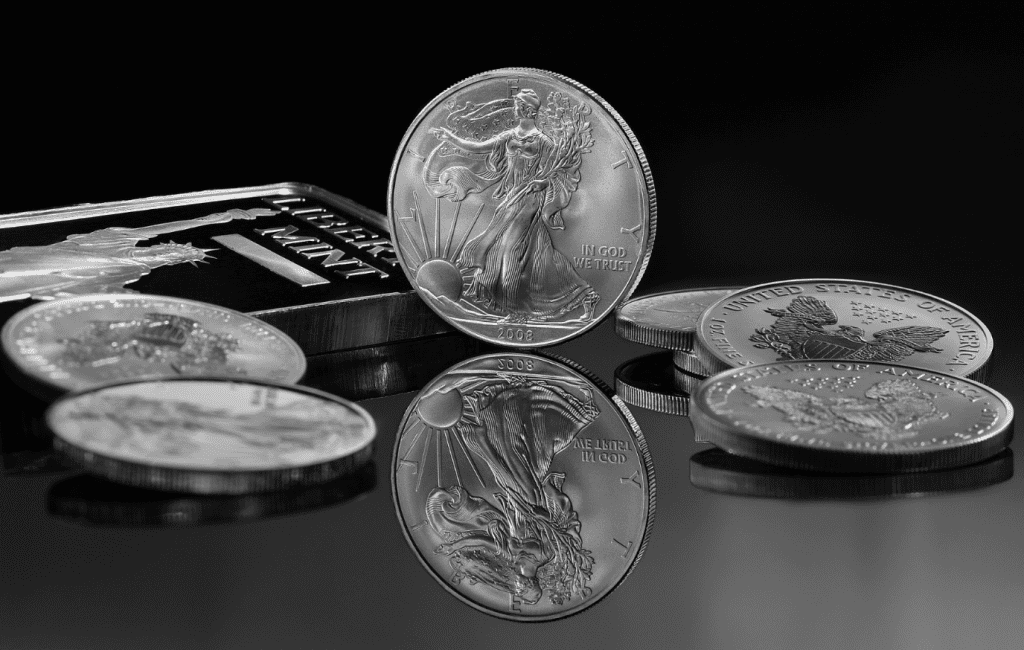
A study to show the inflation-adjusted returns of Silver since 1990. This analysis will show how much of the price appreciation is attributed to the effects of currency debasement and inflation. Any inflation-adjusted or “real” return over this period will quantify the actual wealth increases holders of Silver will have achieved since 1990
This is an important concept because if general prices, for example, rose 20% during the period and the price of Silver also rose 20% then the Silver investor has merely maintained purchasing power with no change to their real wealth. Should the real gain of Silver be positive during any given period then it shows that the Silver investor can now buy more goods and services than they could when they first invested in Silver.
Key Findings
Nominal Performance: Silver has risen 467% in nominal terms between January 1990 and December 2024
Real Performance: We removed the impact of inflation from the Silver price gain by using the US Consumer Price Index. This led to a real (inflation-adjusted) return of 129%
1990s Underperformance: Positive real interest rates in the 90s contributed to depressed precious metal prices, leading Silver to fall in real terms until the turn of the millenium
Positive Real Returns: Since December 2005, the price of Silver has risen more than the rate of inflation, showing a positive return for investors and allowing them to increase their purchasing power by reserving capital in Silver bullion
How Has Silver Performed Against Inflation?
This study takes the noise of currency debasement out of the equation to analyse the real performance of Silver
Early 1990s: Consistent Negative Returns
From January 1990 to December 1992, silver’s inflation-adjusted returns were consistently negative. The most significant decline occurred in October 1990, when the inflation-adjusted return dropped to -16.56%. Over this three-year span, silver failed to generate positive real returns, suggesting that it was not effective in preserving purchasing power during this period of subdued inflation and lackluster demand.
Late 1990s: Sustained Losses Despite Stable Prices
Between 1995 and 1999, silver’s inflation-adjusted returns continued to underperform, with notable lows of -25.92% in January 1997 and -27.45% in September 1998. These declines highlight a period where nominal price gains, if any, were unable to keep pace with inflation. The late 1990s marked one of the longest stretches of poor real returns for silver, reflecting low investor interest and industrial demand.
Early 2000s: Gradual Recovery
Silver’s inflation-adjusted returns began showing signs of improvement in the early 2000s. By December 2003, returns had turned slightly positive, with a modest inflation-adjusted gain of 2.45%. This recovery coincided with rising industrial demand and the early stages of the commodities supercycle. However, the real gains during this period were limited and inconsistent, as inflation continued to offset nominal price increases.
One of the most remarkable periods for silver occurred between 2008 and 2011. During the financial crisis and its aftermath, inflation-adjusted returns surged. In April 2011, silver achieved its highest real return in the dataset at 105.63%. This spike reflected both a sharp increase in nominal prices, driven by heightened investor demand, and inflationary pressures that eroded the value of fiat currencies. The gains during this period underscore silver’s role as a crisis hedge.
After peaking in 2011, silver’s inflation-adjusted returns entered a prolonged decline. By 2015, real returns had fallen to -36.62%, reflecting a significant drop in nominal prices and muted inflation. This period highlighted silver’s volatility and the risks associated with relying on it as a long-term store of value.
The end of the 90s saw looser monetary policies which debased currencies. More liquidity flowing in the financial system lifter bullion prices and caused more investors to buy into the sector, causing an inflow of capital
The 1990s was a period where precious metal markets were severley depressed as positive real interest rates discouraged bullion ownership
The great financial crisis put precious metals into the mainstream as safe haven assets were in higher demand
Charts
Does Silver Beat Inflation Effects?
Silver investors in the 1990s had to wait patiently before they saw any return on their investment in Silver. Silver was not an effective hedge against inflation during this period as positive real interest rates led to very depressed bullion markets. It was not until the 2000s that the nominal Silver price outpaced inflation and led to an increase in purchasing power. Since 2000, Silver has been a very efficient hedge against inflation. Silver holders managed to preserve their purchasing power despite the rise in consumer prices seen in the economy
A Range of Investment Grade Bullion Products
Featured Products
Observations from the Silver Post-2011 Period
Between 2015 and 2019, silver prices stabilized somewhat, with returns fluctuating within a narrower range. The average annual return during this period was moderate, oscillating between -10% and +15%. For example, in 2016, silver saw a notable rebound, with returns reaching approximately 15%, driven by renewed investor interest amid geopolitical uncertainties. However, industrial demand also played a significant role in keeping the prices relatively steady during these years.
Lockdown Impact
The period from 2020 to 2021 marked a significant surge in silver returns, primarily driven by the COVID-19 pandemic. As global markets faced uncertainty, silver became a preferred safe-haven asset, alongside gold. In 2020, silver posted an impressive annual return of approximately 47%, with prices climbing above $27 per ounce. The rally extended into 2021, as demand remained elevated due to continued economic instability and increasing industrial use, such as in solar panel production.
Post-2021 Silver Gains
IPost-2021, silver prices began to normalise. The returns declined as global markets stabilized and industrial demand adjusted to pre-pandemic levels. By 2022, annual returns turned negative, indicating a correction after the pandemic-driven highs. Despite the downturn, silver prices have remained above pre-2019 levels, reflecting its ongoing industrial importance and residual investor interest.
Investing in Silver
Silver Coins
A range of Silver bullion coins with low-premiums. All coins sold by Auronum have a buyback guarantee